


Choosing the right flooring for a commercial space is about far more than selecting a colour or finish that looks good. In the UAE, where businesses operate across offices, retail spaces, hospitality venues, healthcare facilities and high-traffic environments, flooring needs to perform as well as it looks.
The right commercial flooring in the UAE should withstand daily use, suit the environment, remain practical to maintain and deliver value over its entire lifespan.
With the right approach, flooring can become an investment in your workplace—not simply another fit-out expense.
Why Flooring Is a Business Decision
Commercial flooring influences how a workplace looks, feels and functions.
For employees and visitors, flooring contributes to the overall impression of a business. For facility managers, it affects maintenance requirements, replacement costs and operational disruption. For business owners, the wrong choice can result in premature wear, frequent repairs and unnecessary expenditure.
A good flooring decision should therefore consider:
- Expected foot traffic
- Type of business and activities
- Durability and expected lifespan
- Cleaning and maintenance requirements
- Acoustic performance and comfort
- Safety and slip resistance
- Design and brand requirements
- Installation and replacement costs
- Sustainability and environmental impact
The objective is not necessarily to choose the most expensive flooring. It is to choose the flooring that performs best for the environment in which it will be used.
Understand Your Environment
Before comparing flooring products, understand what your space demands.
A corporate office with moderate foot traffic has very different requirements from a retail showroom, healthcare facility or industrial environment.
Consider where the flooring will be installed and how the space will be used.
Traffic: High-traffic areas require surfaces that can withstand constant movement without quickly showing wear.
Furniture and equipment: Heavy desks, chairs, machinery and mobile equipment can place additional stress on flooring.
Moisture: Areas exposed to water or humidity require flooring with appropriate resistance and installation methods.
Noise: Offices and collaborative environments may benefit from flooring that helps reduce impact noise and improves acoustic comfort.
Maintenance: If the facility needs to remain operational throughout the day, easy-to-clean and easy-to-replace flooring can reduce disruption.
Aesthetics: Flooring should support the company’s workplace design and brand identity rather than compete with it.
Understanding these requirements first makes it easier to narrow down the right options.
The Most Popular Commercial Flooring Options
There is no single flooring solution that works for every commercial environment. Different materials offer different combinations of durability, appearance, maintenance and cost.
Luxury Vinyl Tiles
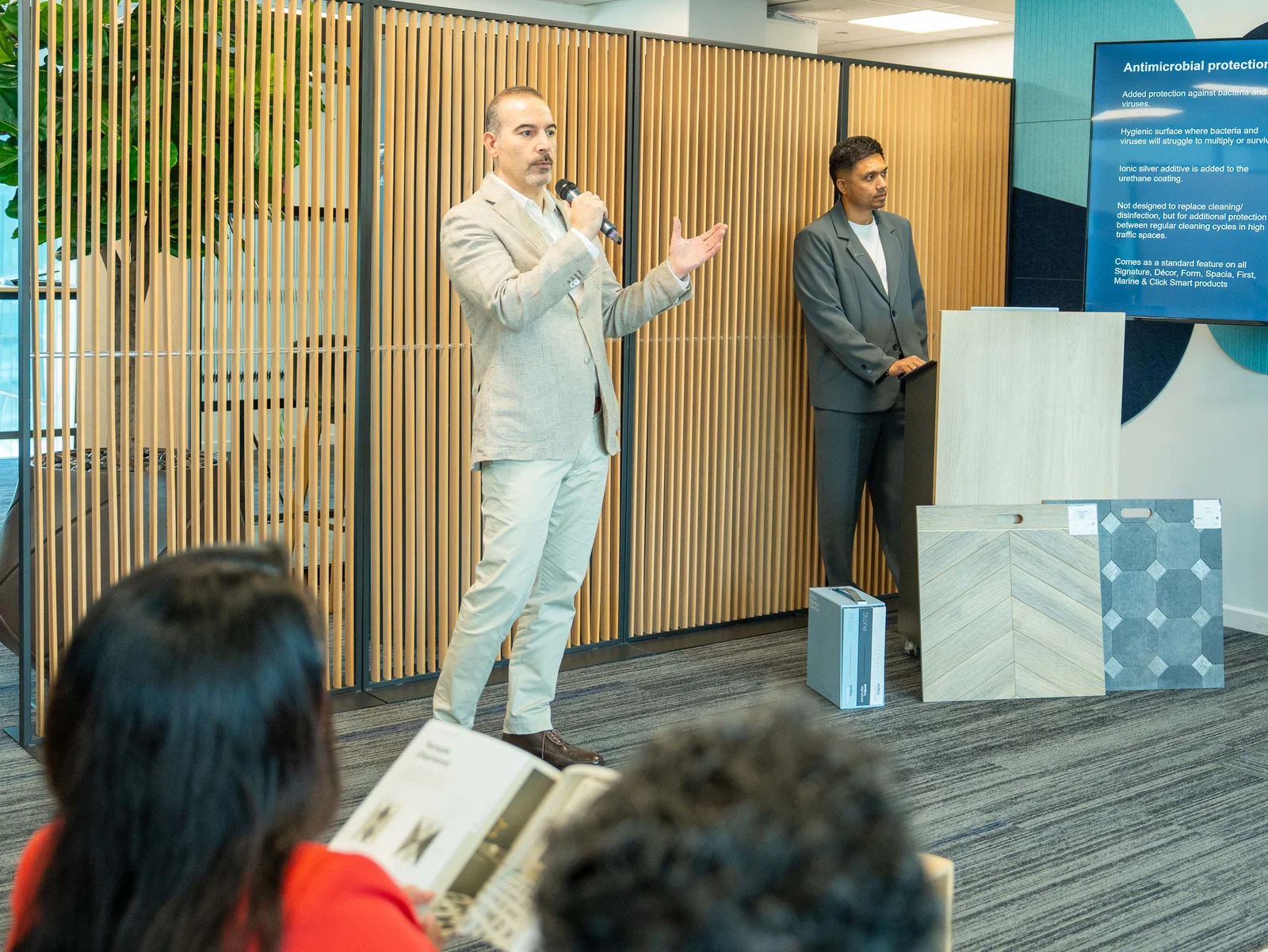
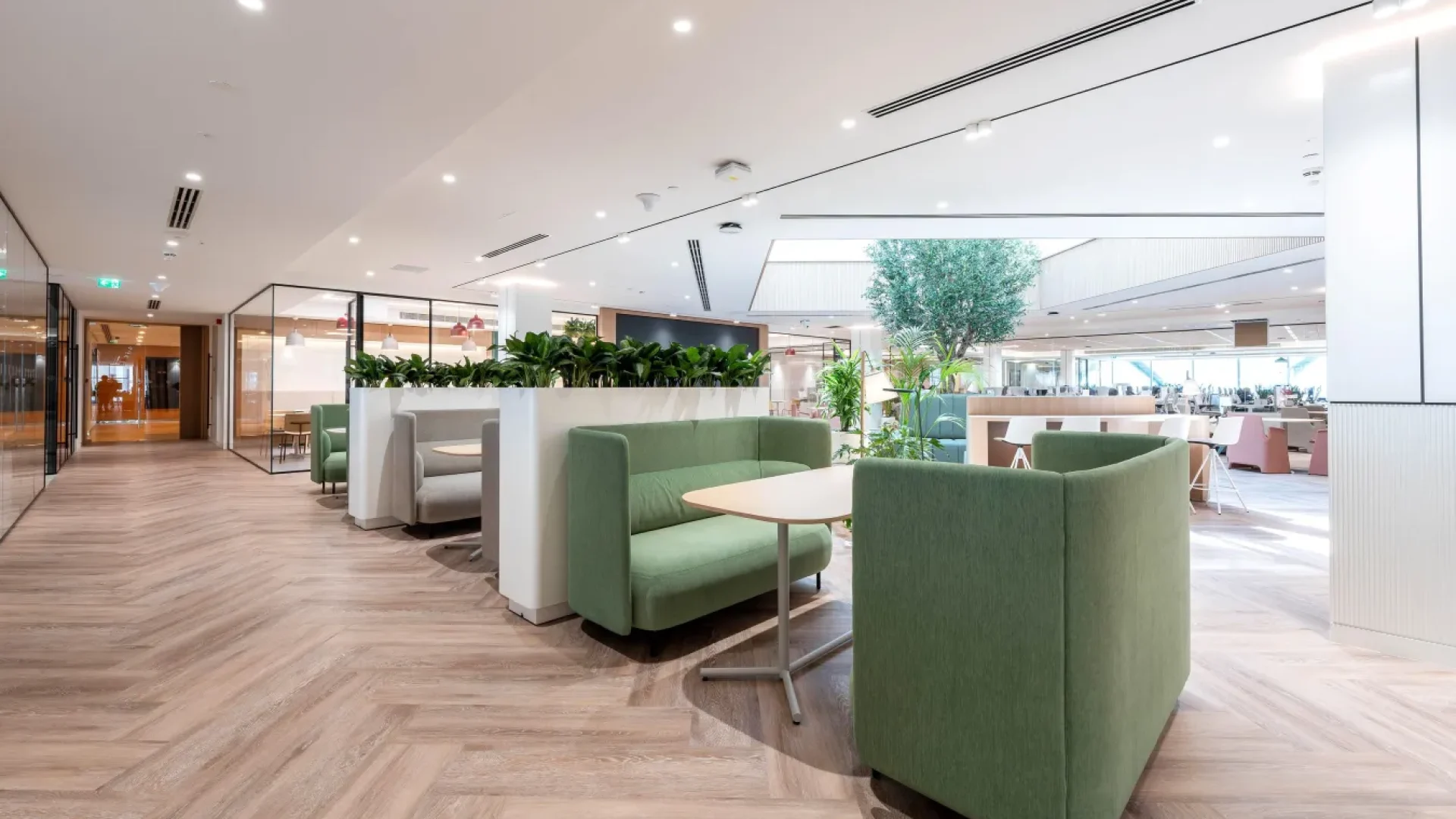
Luxury Vinyl Tiles (LVT) are a popular choice for modern commercial interiors because they offer design flexibility while providing practical performance.
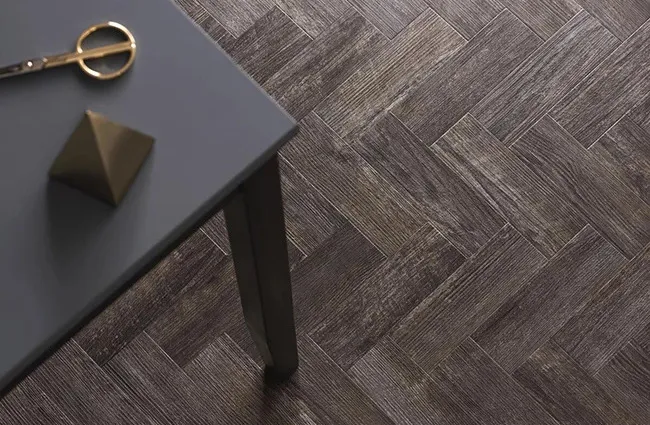
Available in a wide range of colours, textures and patterns, LVT can replicate the appearance of natural wood or stone while generally being easier to maintain.
It can be particularly suitable for offices, retail environments, hospitality spaces and other areas where appearance matters alongside everyday durability.
Carpet Tiles
Carpet tiles remain a practical option for many office environments.
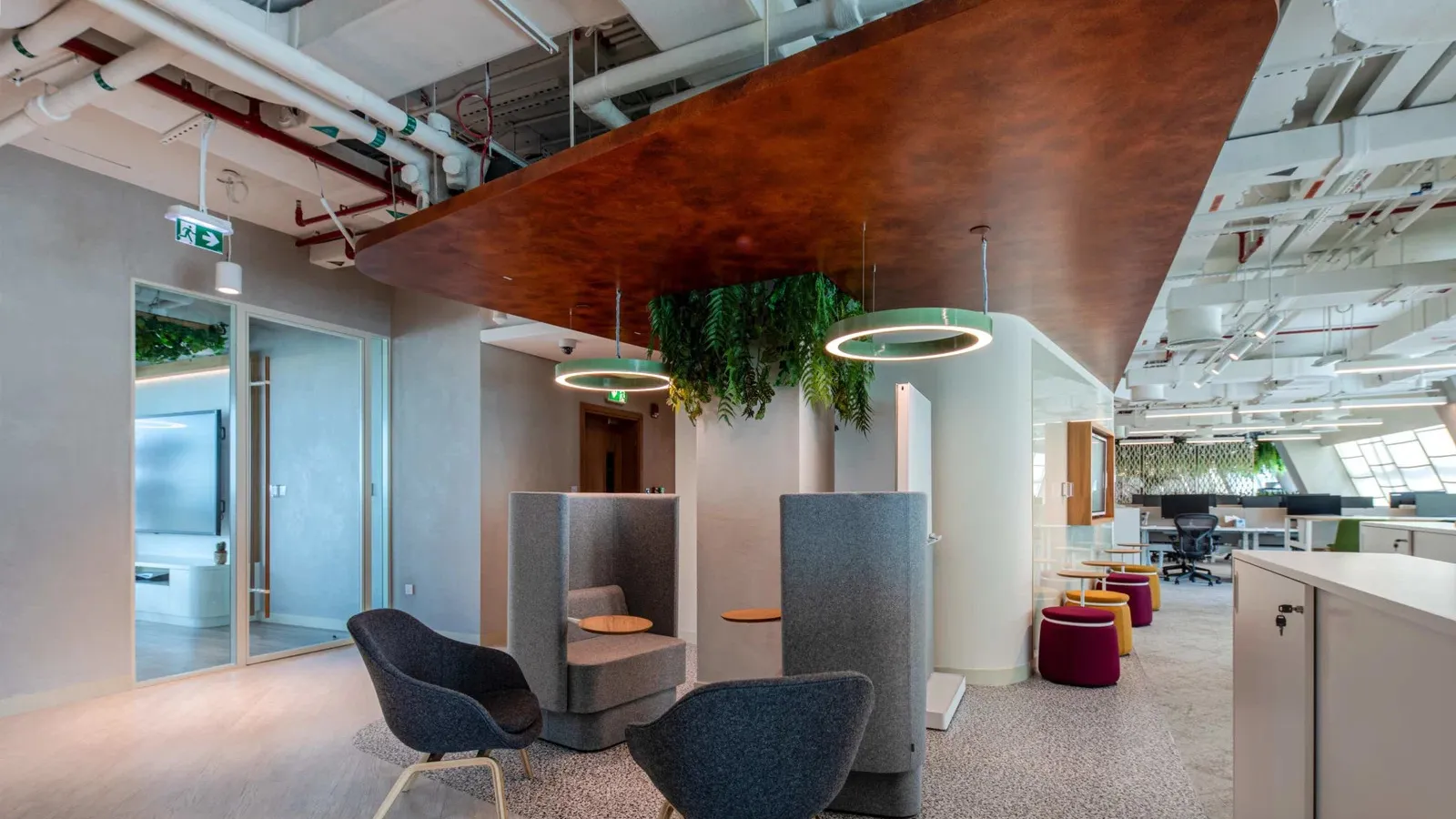
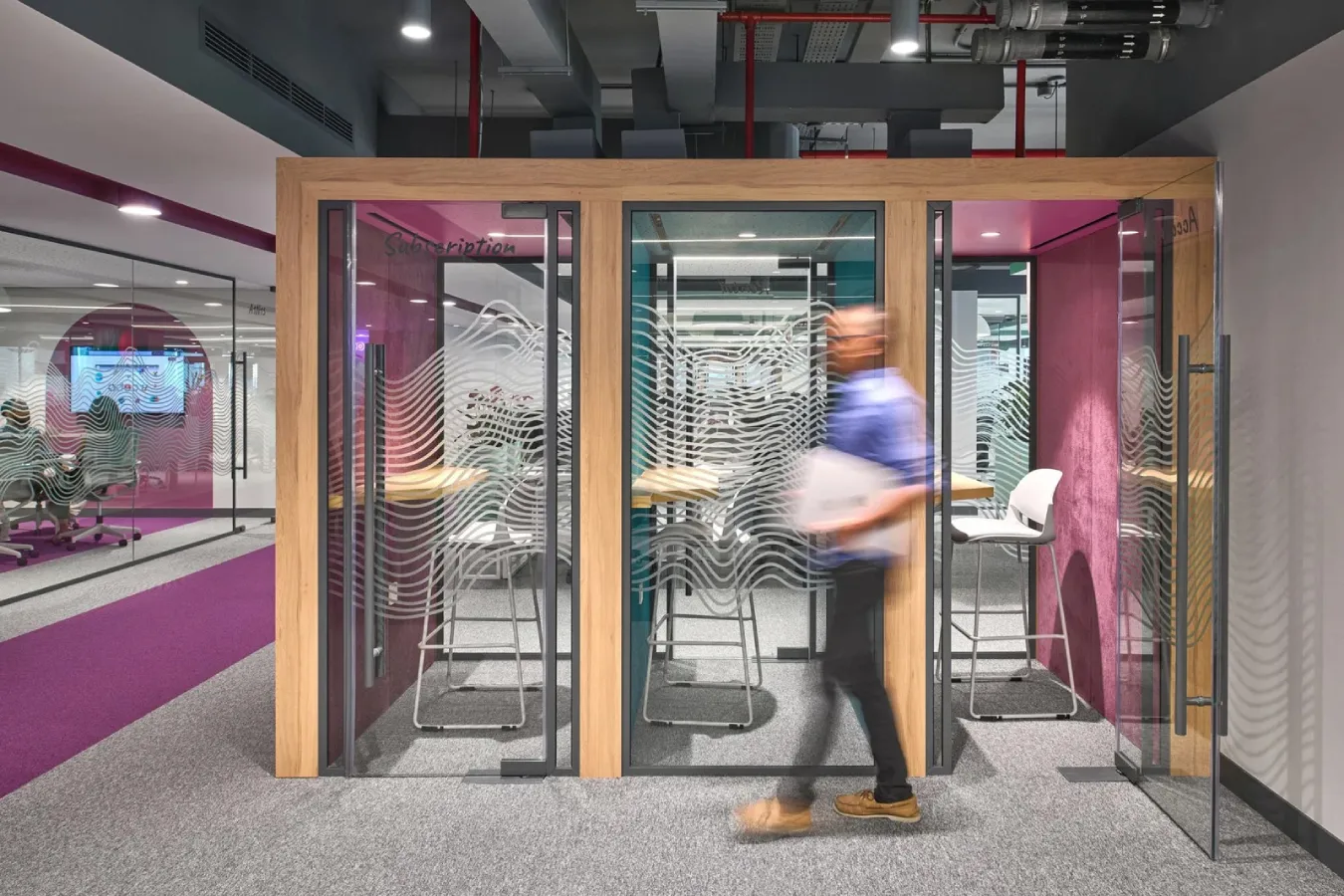
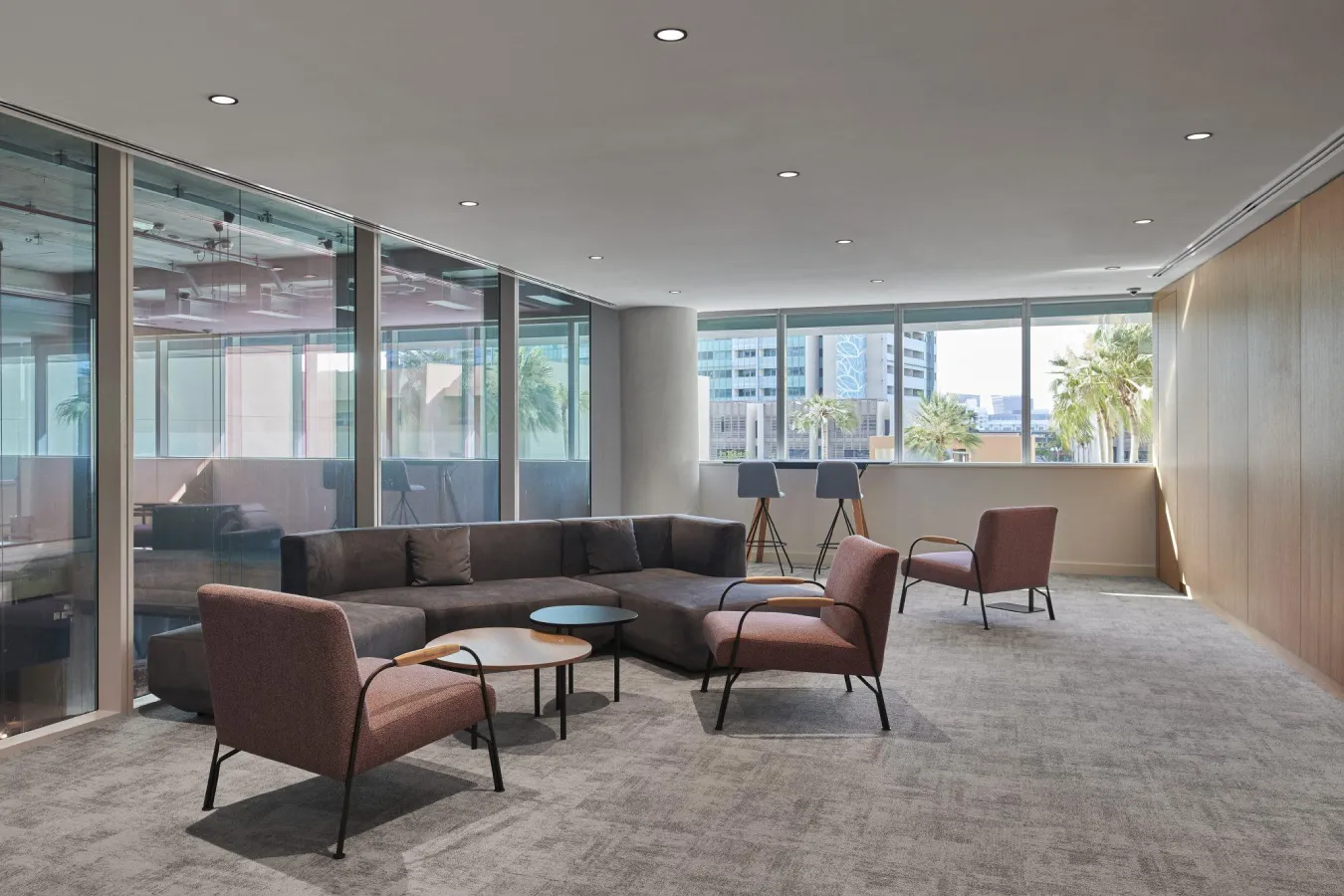
They can provide acoustic benefits, underfoot comfort and considerable design flexibility. Perhaps one of their biggest advantages in commercial settings is that individual damaged or heavily worn tiles can often be replaced without replacing the entire floor.
This makes carpet tiles particularly useful for offices where maintenance needs to happen with minimal disruption.
Raised Access Flooring
Raised access flooring is designed around the modern workplace’s need for connectivity.
By creating an accessible space beneath the finished floor, it can accommodate electrical, data, telecommunications and other building services while allowing easier access when systems need to be modified or maintained.
This can be particularly valuable in technology-driven offices and commercial environments where infrastructure requirements are likely to change over time.
Rubber Flooring
Rubber flooring is valued for its resilience, comfort and resistance to heavy use.
It can be suitable for environments where durability and safety are important, including fitness facilities, healthcare environments and other demanding commercial spaces.
Its performance characteristics can make it a strong option where flooring needs to withstand repeated impact and intensive daily use.
Resin Flooring
Resin flooring provides a seamless, hard-wearing surface that can be suitable for demanding commercial and industrial environments.
Its resistance to wear and ease of cleaning can make it useful in areas where hygiene, durability and maintenance are major considerations.
The appropriate resin system depends on the environment and the specific performance requirements, so professional assessment is important before installation.
Ceramic Tiles
Ceramic tiles are a practical and versatile flooring option for commercial environments where durability, easy maintenance and moisture resistance are important. They are available in a wide range of colours, patterns, textures and finishes, making them suitable for both functional and design-led spaces.
Ceramic tiles can work particularly well in reception areas, retail spaces, hospitality environments, corridors and other areas where floors are exposed to frequent foot traffic or occasional moisture. Their hard surface is relatively easy to clean and maintain, while modern finishes can provide a polished, professional appearance.
However, ceramic tiles can feel harder and less forgiving underfoot than softer flooring options, and individual tiles may require replacement if cracked or damaged. For larger commercial projects, factors such as slip resistance, tile strength, installation quality and grout maintenance should therefore be considered before selection.
Cost vs Lifecycle Value
One of the most common mistakes when selecting commercial flooring is focusing only on the initial price.
A lower purchase price does not necessarily mean a lower overall cost.
Consider the complete lifecycle of the flooring:
Purchase → Installation → Maintenance → Repairs → Replacement → Disposal
A flooring product that costs more initially may provide better value if it lasts longer, requires less maintenance or allows individual sections to be replaced rather than the entire floor.
For example, modular flooring solutions can offer significant practical advantages because damaged sections can potentially be replaced individually. In a busy commercial environment, that can reduce both material costs and operational downtime.
The better question is not simply, “How much does this flooring cost?” It is:
“What will this flooring cost the business over its useful life?”
Sustainability Matters
Sustainability is increasingly becoming part of commercial fit-out decisions.
Businesses are looking beyond appearance and price to consider the environmental impact of the materials they specify, including their durability, maintenance requirements, recyclability and end-of-life options.
Long-lasting flooring can itself contribute to a more sustainable approach because products that need to be replaced less frequently consume fewer resources over time.
When comparing flooring options, ask suppliers about:
- Product composition and manufacturing
- Recycled or recyclable content
- Expected lifespan
- Maintenance requirements
- Indoor environmental considerations
- Recycling or disposal options
- Relevant environmental certifications
Sustainability should be considered alongside performance rather than treated as a separate requirement.
Common Mistakes to Avoid
Choosing Based Only on Appearance
A flooring sample may look excellent in a showroom but perform poorly in a high-traffic commercial environment. Always evaluate aesthetics alongside performance.
Focusing Only on Initial Cost
The cheapest option may become expensive if it requires frequent repairs, intensive maintenance or early replacement.
Ignoring Maintenance
Every flooring material has different cleaning and maintenance requirements. Consider whether your facilities team can realistically maintain the chosen flooring.
Underestimating Traffic
A flooring specification suitable for a low-traffic office may not be appropriate for reception areas, corridors, retail spaces or other heavily used zones.
Treating the Entire Building the Same
Different areas may require different flooring solutions. Reception areas, workstations, meeting rooms, corridors, kitchens and specialist spaces can have very different requirements.
Forgetting Future Flexibility
Businesses change. Workplaces are reorganised, technology is upgraded and departments move. Flooring solutions that allow easier modification or replacement can provide greater long-term value.
Final Thoughts from Dawood Ali Mirza
“The best commercial flooring is not necessarily the one that looks the best on day one. It is the one that continues to perform, support your workplace and deliver value long after installation.”
At Office Solutions, the goal should be to look beyond individual flooring products and understand the environment, operational requirements and long-term objectives of each business.
The right commercial flooring in the UAE is ultimately a balance of performance, aesthetics, practicality, sustainability and lifecycle value.
Make the flooring decision part of your overall workplace strategy—not an afterthought in the fit-out process.
Book a Flooring Consultation
Need help choosing the right flooring for your commercial space?
Book a Flooring Consultation and discuss your requirements with the Office Solutions team.